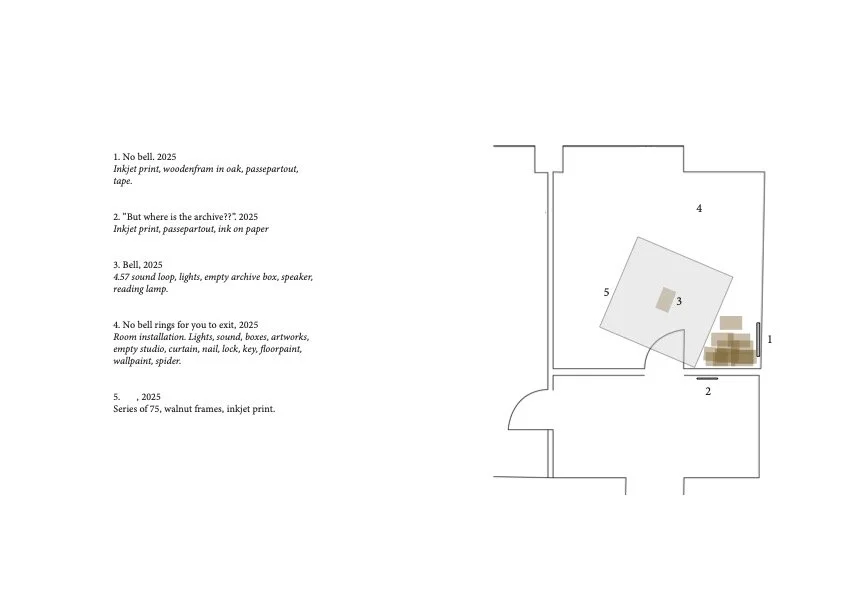
No Bell Rings For You to Exit (2025)
Where does the line between box and room go? Can a room be full if there is nothing in it, but maybe most importantly; can it ever be emptied?
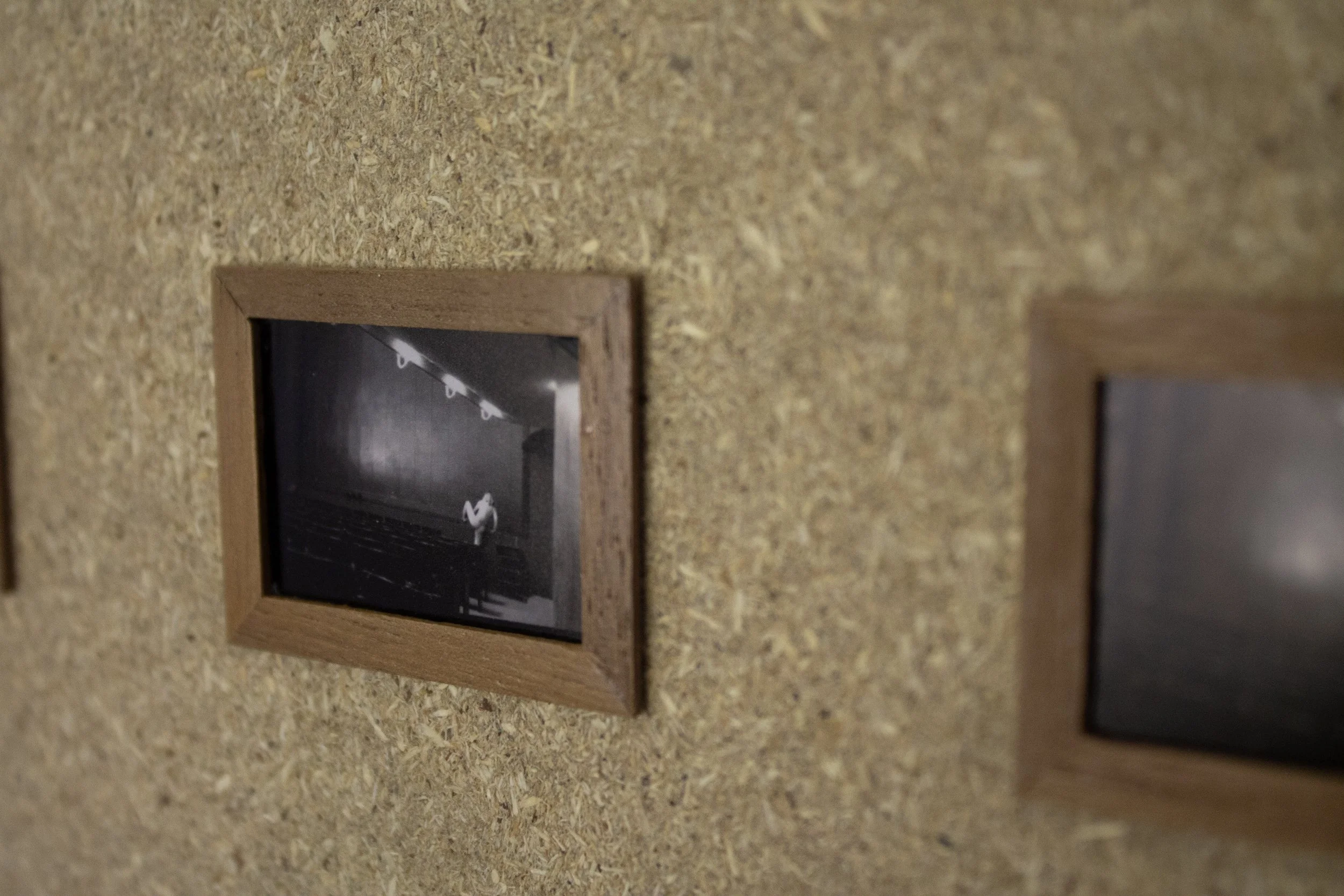
Where does the line between box and room go? Can a room be full if there is nothing in it, but maybe most importantly; can it ever be emptied?
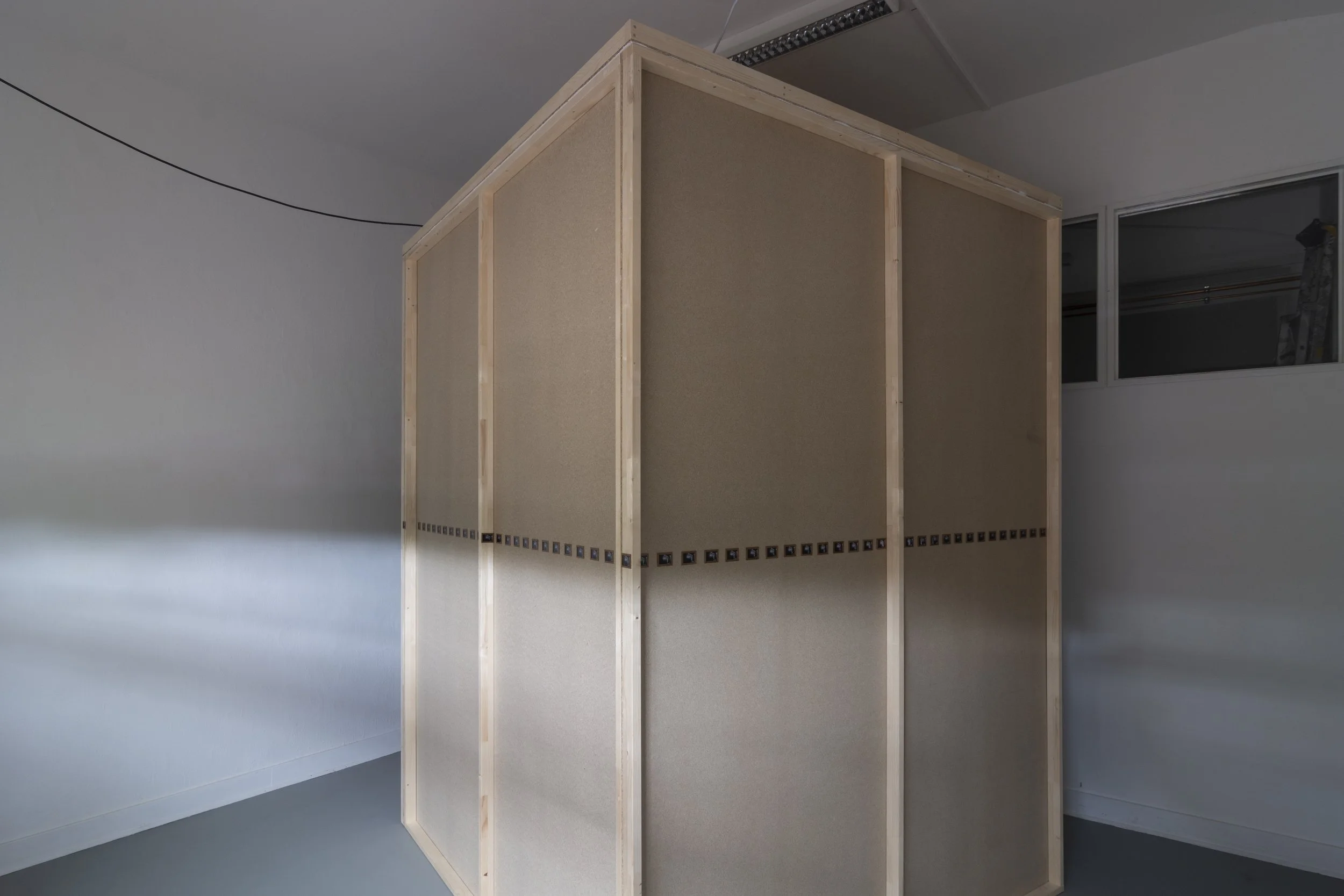
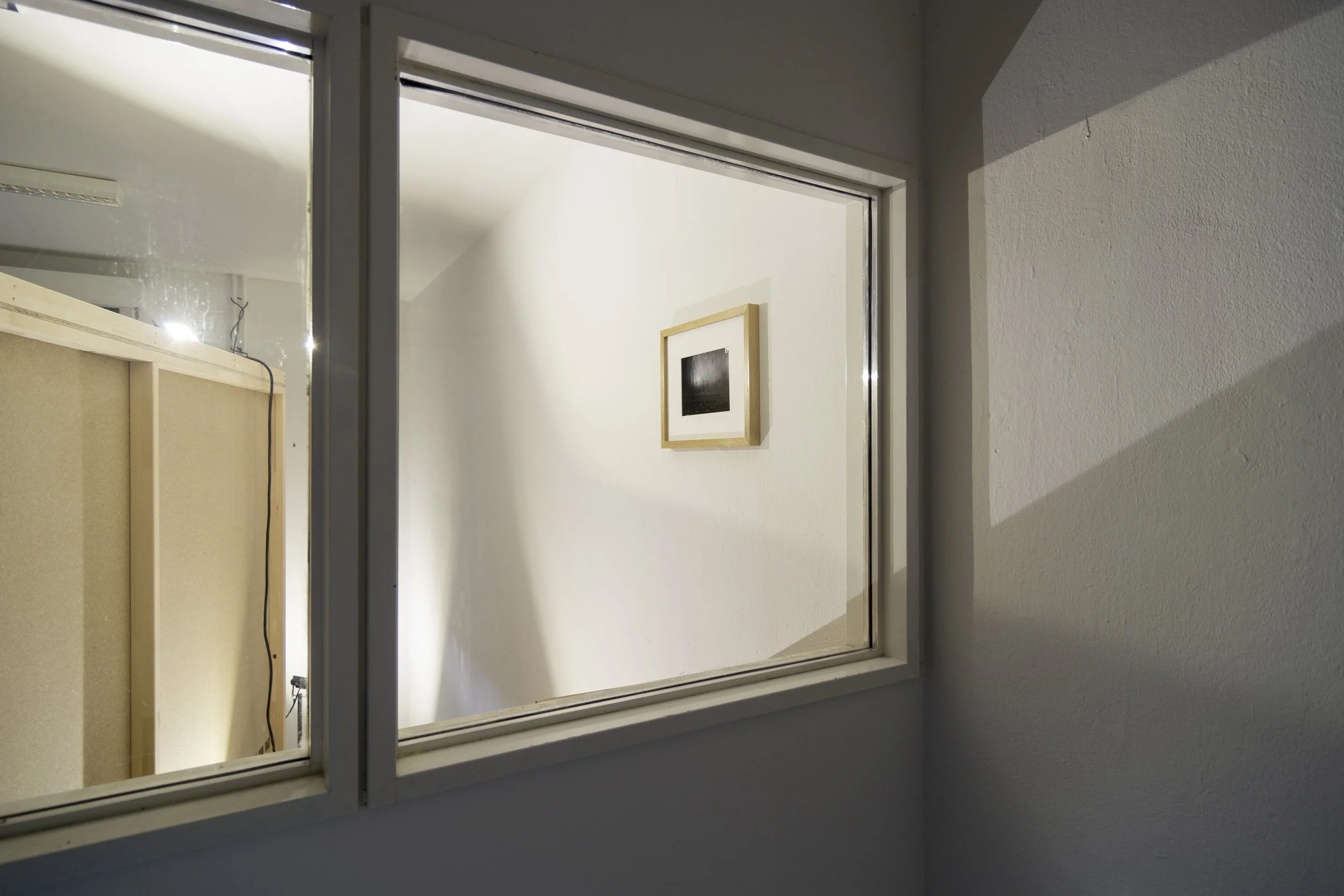
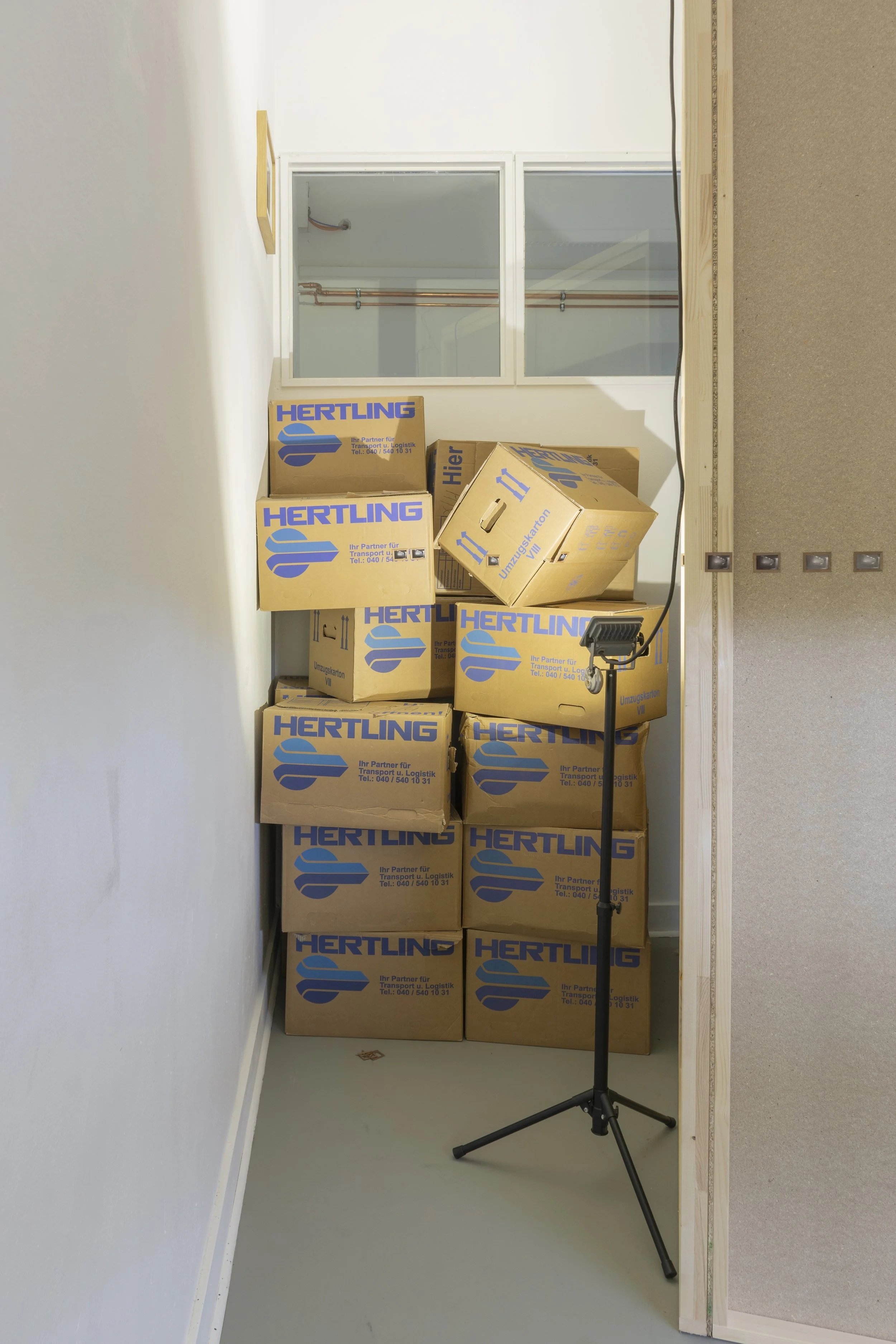
The work No bell rings for you to exit explores how absence is present in spaces that would be used, or not used, as storages. Can you ever separate a box from its content? The example lifted is a sight specific piece using boxes courtesy of HFBK which for a while served the purpose of storing the archive of HFBK. Do the boxes still hold the presence of the archive?
In a similar way the work also refers to the rooms/studios as emptied boxes, The question is if a room can be a box for storing and what follows is of course the same question of what happens when these “boxes” are emptied for, as an example, the graduate show. The room will never be a white cube – and an idea could be that this is because of the presence of people’s personal belongings which presence remains in the rooms. We empty these storages to make room for the work, but where does the line go between work and room? In this case the room becomes the work, quite literally. Why? To be able to entre an empty room, in the exhibition context, you need to exit the applied room. Passage, allowing to see the exhibitions room as a backstage.
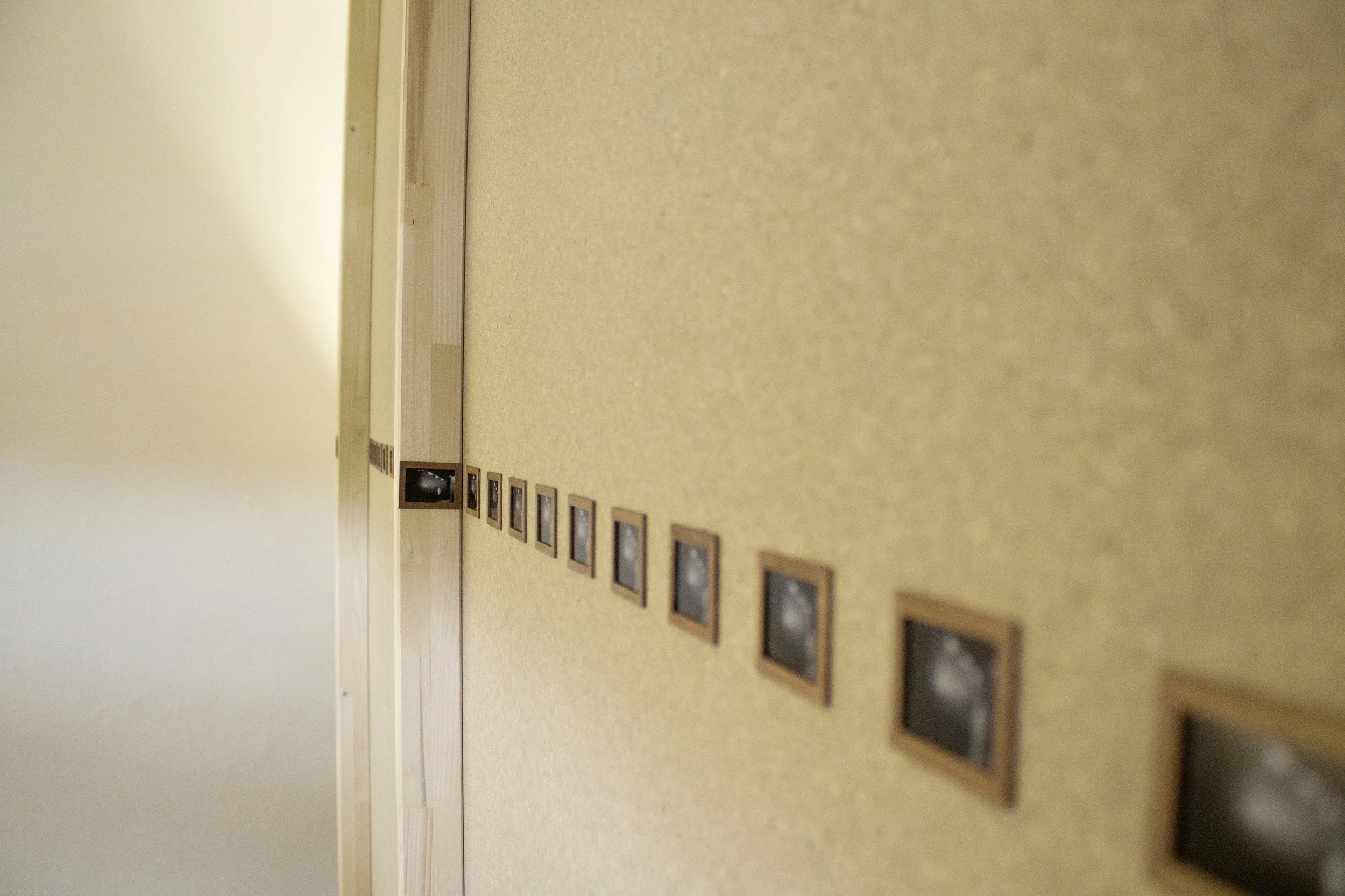
The art pieces themselves are being put in the same sort of transition the HFBK archive was in – as it was held by the storage boxes. The work of the rooms will become the archive, and in transition they are being placed in the holders that usually hold storage.
So, what happens within the transitional holding, in the 120a?
The pieces presented show an example of how one can look at the storage, and the act of looking into an empty or full box, but what the observer engages in is the conceptual work of what a room can hold. To show the example a piece needs to be present, but the actual work presented goes beyond that. The installation has two tracks, one being the art piece and one being the theory within the work the installation opens for by just existing.
The box is a stage and you may or may not enter(/exit?).
First ring
Finish your glass, sipsip
Second ring
Hurry to the bathroom, line
Third ring
Now you really have to find your seat quickly
Later
silence supposed to escort you out? or simply allowing to stay
Agnes Eeg-Olofsson, 2025